Sources

Big brother, big business: The data-mining and surveillance industries [Video file]. (2007). 

Dinev, T., Bellotto, M., Hart, P.J., Russo, V., & Serra, I. (2006). Internet Users’ Privacy Concerns and Beliefs About Government Surveillance: An Exploratory Study of Differences Between Italy and the UnitedStates. JGIM, 14, 57-93.

Hill, K., & Mattu, S. (n.d.).Transcript of “What your smart devices know (and share) about you”. 

Hypponen, M. (n.d.). How the NSA betrayed the world’s trust – time to act. 

Jones, A. (Producer). (2017, December 29). Arkangel [Television series episode]. In Black Mirror. Netflix.

Netflix. (2017, November 25). Black Mirror -Arkangel | Official Trailer [HD] | Netflix. 

Schanzenbach, M., & Betreuer, B.S.(2014). Hiding from Big Brother.

Science of surveillance [Videofile]. (2007). Retrieved from

Shearer, J., & Gutmann, P. (1996). Government, Cryptography, and the Right to Privacy. J. UCS, 2, 113-146.

Soghoian, C. (n.d.). Transcript of “How to avoid surveillance … with the phone in your pocket”. 

The real big brother [Videofile]. (2006). 

To summarize:

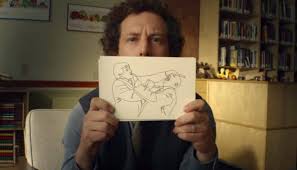
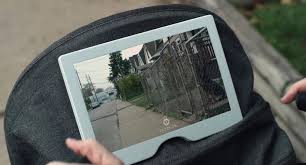
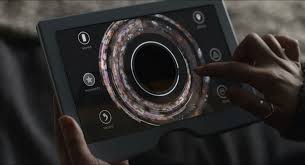
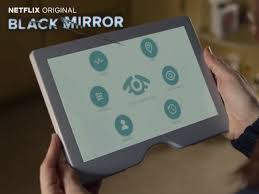
Surveillance technology could potentially cause a lot of problems if it goes too far.  The episode of Black Mirror titled “Arkangel” shows many examples of how, in the future, surveillance technology could step over many very personal boundaries.  There are multiple ethical questions and dilemmas surrounding technology in “Arkangel”.  Technological abilities are growing fast and if people do not take a minute to review the possible consequences, the results could be dangerous

“Science of Surveillance”

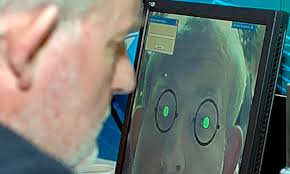
“Science of Surveillance” is about how surveillance technology is a growing industry and how it could be used to help society, but also how it could end up leading to extreme invasions of privacy.  The first example of surveillance in this video is that London has installed cameras on almost every corner of every busy street. The cameras track the license plates of the cars driving by and record when they all come and go (Science). Some buildings have cameras so high-tech that even though they are mounted on forty-foot high ceilings, they can easily make out the serial number on a dollar bill (Science).  Some airports in the United States have installed iris recognition. To stop people from using forged passports, iris recognition can see a person’s exact and unique color and pattern of the iris in their eye (Science).  This is extremely advanced and an invasive use of technology.  

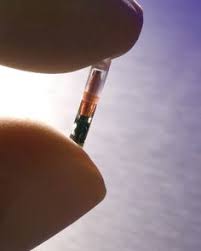
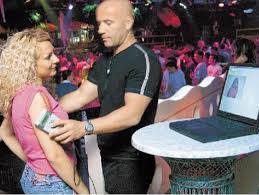
A man named Rosner was on his own rooftop on a date with a woman and a surveillance helicopter recorded the end of their date without their knowledge for four whole minutes.  He did not find out until a news reporter told him about it months later.  There is no reason an areal vehicle needs to be filming random people without their knowledge or consent.  This video also mentions the invasive no card no money Baja Club in Holland.  Customers that decide to get the chip, have to go to the doctors to get it implanted before they visit the club.  The procedure is so intense that they need an anesthetic for it and the chip stays in them for life unless they opt to get surgery to remove it.  Deciding to have a foreign object inserted into one’s body is a crazy amount of dangerous surveillance that people do not have the full grasp of. Supervision is getting out of hand everywhere in the world.  

“How the NSA betrayed the world’s trust – time to act”

Mikko Hypponen talks about how foreigners are being watched and investigated more intensely whether they are suspected of wrongdoing or not.  In this TedTalk, Hypponen focuses on the NSA data center in Utah.  This data center is basically a supercomputer that was built to store data. This type of data center could store data for decades (Hypponen).  He explains that by law the government can only monitor foreigners, however, ninety-six percent of the planet are a foreigner to the U.S. (Hypponen).  This is kind of like “Arkangel” in the way that the mother is not supposed to be using the tablet when her daughter is older, but she uses a loophole and does it anyway without telling her.  The U.S.claims they are looking for terrorists but they are actually just watching the actions and behavior patterns of other countries.  Hypponen says that the government wants to make an encryption that seems safe but is actually slightly weakened so that the government can get into it.  The United States is already doing this by buying big companies, for instance, Skype, and slightly weakening them to make what once were safely encrypted companies into insecure companies (Hypponen). “Regulation and control of cryptography use on the Internet by national governments may lead to an imbalance in the citizen/government power relationship…” (Shearer).  Other countries are trying to build and create their own safe versions of operating systems and clouds services so that the United States does not have control over everyone’s data.  The United States is surveilling other countries and they do not like it.

“What your smart devices know (and share) about you”

In “What your smart devices know (and share) about you” Kashmir Hill and Surya Mattu talk about how smart devices record and report data without most people knowing. Kashmir Hill claims, “one in six American adults now has a smart speaker” (Hill & Mattu).  Hill decided to install eighteen smart devices into her home, including her bed, to turn it into a smart home and see how much information the devices actually tracked.  Her home was not digitally silent for even an hour the entire time she had her smart home set up (Hill& Mattu).  This is kind of like how the mother had her daughter’s tracker turned on and open on her tablet the entire time she was growing up in “Arkangel”. The appliances in Kashmir’s home were sending information to her Internet service provider.  “An unprecedented amount of information is being gathered and stored by both private corporations and government agencies for the purpose of profiling consumers and citizens”(Dinev 2006).  Her TV was tracking exactly when and what she was watching, which is unsafe because, in the past, her TV company had to pay a settlement for selling very detailed information of its viewers to data brokers and advertisers (Hill & Mattu).  Her Amazon Echo “contacted its servers every three minutes, regardless of whether [she] was using it or not” (Hill &Mattu).  Hill explains that if a person buys a smart device, that even though he or she technically owns the device, the company it came from owns the data it records.  Smart toothbrushes, like the ones created by the company Beam, can record even how often a person brushes their teeth (Hill& Mattu).  Smart devices are basically used to target and profile the company’s customers.  This level of surveillance is unnecessary and frightening, exactly like in the mentioned episode of Black Mirror.            

“The Real Big Brother”

“The Real BigBrother” is a video mainly focusing on how employers are overusing surveillance technology on their employees and customers. A club in Holland called Baja Club is so invasive that its customers do not even need to bring cash or their card there to spend money; they have a chip implanted into their arm that shows who they are and lets them pay for drinks with a connected card(The Real BigBrother).  Not all club-goers have to have a chip in their arm, but if they do, when they get scanned a picture of their face even pops up on the club employees’ screens.  This is extremely advanced technology.  

At the RAC, they use GPS technology to track signals from mobile phones to find people’s locations (The Real Big Brother), much like the mother in “Arkangel” finds her daughter’s locations (Jones 2017).  CallMedia is a company that focuses on surveillance.  It can track their employees very closely.  It shows what they do throughout their shifts.  Their time, down to the second, is compared between break time and actual work time (The Real Big Brother).  Some companies watch their employees so closely that just two months worth of surveillance information would barely fit into a four-inch binder.  Another example of futuristic technology in this video are these grocery stores in Germany that track their shoppers.  When customers walk in the door they have to“log in” with the shopping cart they are using. People also have to scan items on their carts before they can put them in the basket.  There are also shelves where when a person picks up a product, an advertisement for that product pops up on a nearby television screen (TheReal Big Brother)!  Germany’s hospitals are also high-tech.  Some people get chips implanted in their arms storing all of their medical and personal information, much like a chip is implanted into the child in“Arkangel” (Jones 2017).  People get scanned like they are items to be bought.

Big Brother, Big Business: The Data-Mining and Surveillance Industries

This is a film with recorded proof of people overstepping boundaries with surveillance.  It explains how the fittingly named little black box that is built into cars can record how smoothly or roughly a driver drives and, in the future, could possibly end up giving out speeding tickets without an officer even having to be present. That is unnecessary surveillance of people and would eventually just cause people to an uproar.  In the Black Mirror episode, the mother can keep an eye on her daughter just like these black boxes can keep an eye on how safe a driver is (Jones 2017).  The film also talks about how Onstar can track a car’s location. This type of surveillance has caused issues in the past with car companies tracking people using rented cars (Big Brother).  Even Xerox printers use surveillance by printing tiny yellow dots on each page recording the serial number of the printer and the date and time the page was printed (Big Brother).  Howard Boyle, the President of Capitol Fire Sprinklers, tracks his employees without even telling them.  Using computer software, he can tell exactly where they are, how fast they drive and how long they were at a specific location.  He claims that this not overstepping any boundaries because it is “not a privacy issue” (Big Brother).  This is like when the mother in “Arkangel” does not tell her daughter that she is being tracked when she is older (Jones2017).  She apparently does not believe that watching what her daughter does all the time without informing her about it is a privacy issue.  Kevin Bankston says that if a person’s cell phone is on, then the cell phone company is receiving information about your location and storing that information too (Big Brother).  This is a big example of surveillance without letting people know they are being surveilled. When a customer calls, Jovia, a high end restaurant that is featured in this video, and leaves their name and phone number to make a reservation, the restaurant can see and keep track of how many times they have made reservations, how many times they have canceled, how many times they do not show up for their reservation, and how many times they have shown up.  The owner of Jovia also makes notes for if it is a customer’s birthday or if it is a difficult customer (Big Brother).  This could cause the restaurant to deny serving the customers who are difficult if they want to.  This act of keeping track of a difficult customer is similar to the episode in Black Mirror when the mother keeps track of her daughter’s dangerous behaviors when she is older. It is giving people less freedom and opportunities because of surveillance.  Verint Systems is a smart version of security cameras.  It is a surveillance system that watches customers so closely that even if a customer just stands in one place for too long, it alerts an employee to go make sure they are not stealing anything.  This is aggressive surveillance that involves recording people with extremely sensitive technology.  Probably the biggest form of dangerous surveillance in this film is Choice Point.  Choice Point is a company that keeps a database of information on every U.S. citizen. It keeps track of people’s “phone numbers, addresses, credit reports, property records, bank accounts, insurance policies, and social security numbers” (Big Brother).  It sells all of this information.  It can be assumed that in the future, like where the “Arkangel” episode takes place, the government is also tracking all of the information that the mom can see because the government tracks information in so many ways already (Jones 2017).  The Internet also keeps individuals’ information to possibly sell to companies or give to the government.  This is called data-mining.  For example, AOL keeps search history forthirty days and Google keeps search history in a database forever.  It even keeps a person’s deleted emails forat least two months (Big Brother).  These are just a few examples of how invasions of privacy are happening in the world currently.

How to avoid surveillance … with the phone in your pocket

This is a TedTalk that focuses on explaining the surveillance technologies wired into cellphones.  Privacy activist, Christopher Soghoian, says that phones were originally designed to record calls and information.  “Today’s communication systems are under attack by states and large corporations with sheer endless capabilities” (Schanzenbach 2014).  He talks about how strong encryption technology is being built into products so that phone calls and text messages cannot be easily wiretapped (Soghoian).  He is describing the good things happening with surveillance technology control currently (Soghoian).  This is apparently causing the government to be upset.  Government officials want to be able to hack personal technology more easily but it is a good thing that itis getting more difficult for them.  ThisTedTalk is relative because it shows that the government does have some surveillance over citizens.  It also is causing problems like it did in BlackMirror because if the government is upset that they do not have enough power to hack into people’s personal devices, then they are obviously power hungry and need to be slowed down a little.